March was one of the most intense months I’ve had in a long time. It threw everything at once: migrating customers onto my new quote-and-bind system, packing up my home of 15 years, our buyer withdrawing the day before signing missives, and going through my first on-site audit as a coverholder.
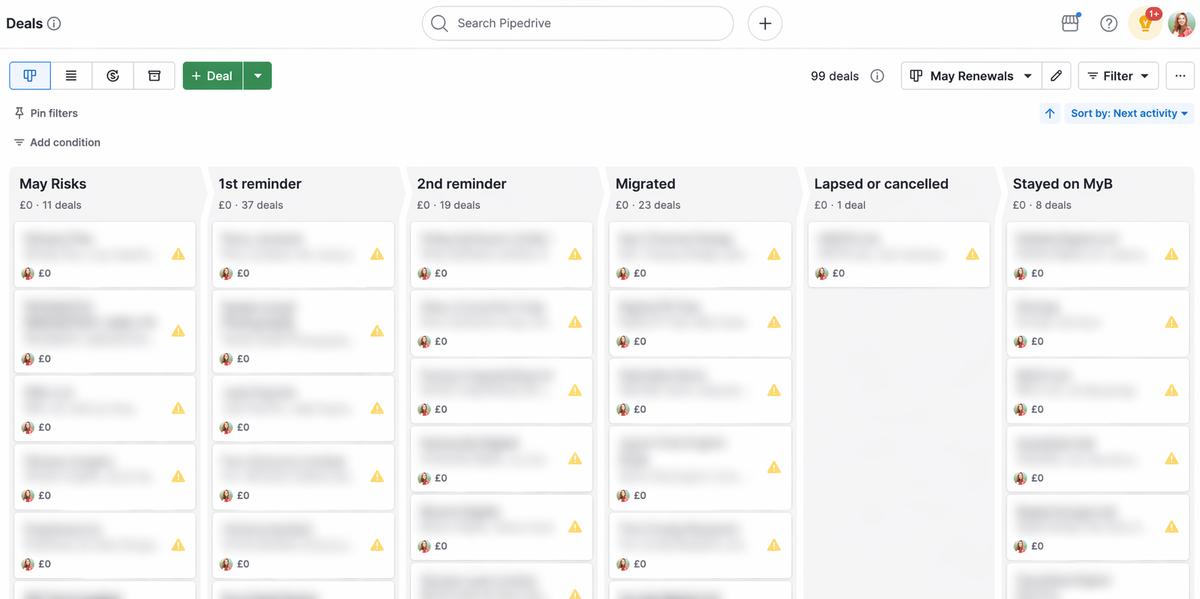
Last month I began the mammoth task of transitioning existing customers over to my new platform. I wrote about my plans to migrate ~ 1,400 customers to a new system without chaos, but here's a summary of events:
- I hired a communications consultant to develop a migration strategy
- My fear was losing customers due to price increases, procrastination or bounced emails
- 50% was my benchmark for a successful migration
- The insurer's bar was higher at 80%
Now that I have one month of data behind me, how is it going? Was the strategy worth it? And were those fears justified?
Spoiler alert: I'm pleasantly surprised
You only really learn about your product once it’s live and in the hands of real users. Before that everything is an assumption. Often a biased one at that.
That definitely applied to my fears around the migration. With the price increase and extra steps, I guessed only 30% of customers would move across.
I was wrong.
Outside of the new prices for US cover (which are high across the industry), only one person has referenced the change to pricing. Migration is already sitting at 70% and we haven’t completed a full cycle.
Based on this I’m confident it will climb higher. I don't think we'll reach the 80% the insurer was hoping for, but it’s well above what I expected.
What's reassuring is that this is just month one. We've spotted the kinks and can figure out how to tweak things from here.
Observations and lessons
Claims experience is the retention moat
Customers who've had a positive claims experience are the quickest to renew. It's no surprise that claims experience is our retention moat. Those that have used their insurance understand it's more than a box ticking exercise.
I lost sleep over things that weren't the problem
The things I was anxious about weren’t issues. The things I didn’t consider have caused problems (but never to an extent worth fretting about). I wasted sleepless nights worrying that certain risk questions would be a bottleneck. Instead, questions I hadn’t thought twice about have triggered unexpected referrals. Founder intuition is useful, but real users will always surprise you.
Self-service doesn’t eliminate hand-holding
Even with the self-service platform I'm receiving requests from customers asking us to do things for them. That doesn’t mean the platform isn’t working or that there's a user experience problem, it's just that different people want varying levels of support (and they're falling back on a behaviour they've become accustomed to for years). Realigning people's expectations won't happen overnight.
“Engaged” customers aren’t who you think they are
I was convinced we'd lose the customers that have let their insurance auto-renew for 5, 6 or 7 years without responding to any emails. I was wrong. Quieter customers don't always mean disengaged customers.
There are others I've had memorable interactions with and would class as 'engaged' who didn't convert. Those who shaped the migration by responding to surveys or participating in focus groups churned. I've learned not to put too much weight into feedback. What people say isn't always what people do.
People don't read so design like they won't
People put admin off, don't follow the instructions and then panic. Always design with the assumption that people won't read. That means short prompts instead of heavy text. One call-to-action. Headlines that tell people what to do. Even then, some people won't take it in.
We put a lot of work into the migration guide by preparing:
- a sequence of emails
- launch videos
- a demo of the new system
- FAQs
- a migration landing page
Some people still said it wasn't clear what was happening.
Most product problems are behaviour problems
I've had frustrated emails from customers saying their login doesn't work… but they haven't created an account. People don't see the distinction between product and behaviour problems. To them, not being able to login (despite not creating an account) feels like the system is broken. Their frustration is then directed towards us. I think this lesson ties into the above—design your product like people won't read. There’s no such thing as too much hand-holding (especially when it comes to admin).
The migration became a risk correction tool
This was my biggest surprise. I was afraid self-service would make it easier for people to buy the wrong policy (this concern flagged up in focus groups, too!). The opposite happened. It's helped us uncover customers who’ve been on the wrong policy for years or missing an important element, either because they've misdescribed what they do or never updated us as their business evolved. The migration identified those customers and fixed that.
Transparency builds goodwill
I knew this already. Being open is how I've always run my business, but the role of transparency in building customer relationships has been reinforced with this migration. When you explain the complexity of what you're doing, customers are more forgiving of the speed bumps. It helps that my customers are largely working in the digital world, too. Many have first-hand experience of working with clients on similar system updates and can empathise. The focus groups and surveys highlighted how important the founder voice is, as did the parts of the migration that didn't go smoothly. Instead of shying away from issues, we brought customers along on the journey with us.
Insurance is too fragmented
Customers don't think in terms of brokers, insurers or dashboards. They just know they bought insurance. We saw confusion around the legal expenses dashboard versus our own platform. Fragmentation is something I want to address over time. For now it's about getting sign-ups on the board and the migration process getting underway.
And the least surprising lesson of all… people procrastinate. There's nothing I can do about this.
I thought my biggest stress would be the price increase or lapsed customers. Instead it's come from people leaving their migration until the final hour. Sometimes literally the final hour.
We then discover they're on the wrong policy or they answer 'false' to risk questions, which triggers a referral to the insurer. But it's a Sunday and the insurer is closed. I'm left scrambling to get everything over the line.
That part has been undoubtedly the worst.
I thought this migration would test our tech and our pricing. Instead it tested my assumptions about our customers, but it's also taught me something more important.
I spent months worrying. I lost precious sleep. I ran through every possible failure scenario in my head, causing my cortisol to spike. And for what? Maybe it’s still early, but this system looks like a success. New sign-ups have doubled. Renewals are migrating. The things I feared most did not happen.
Of course, a lot of this relates to back to how much I care about getting it right and how much work we put into it. But if I was to ever do this again I’d spend less time trying to predict the outcome and more time trusting that I’ll figure things out once they happen.
One month down. Eleven to go.